Classification of Optical Materials
Classification of Optical Materials: Optical Glass, Optical Crystals, and Special Optical Materials.
Jun 7th,2023
68 Views
The first step in all optical manufacturing processes is selecting suitable optical materials. The optical parameters (refractive index, Abbe number, transmittance, reflectivity), physical properties (hardness, deformation, bubble content, Poisson's ratio), and even temperature characteristics (coefficient of thermal expansion, refractive index vs. temperature) of optical materials all affect the performance of optical components and systems. This article will briefly introduce common optical materials and their respective characteristics.
Optical materials are generally classified into three categories: Optical Glass, Optical Crystals, and Special Optical Materials.
01 Optical Glass
Optical glass is an amorphous (glassy) optical medium material capable of transmitting light. After passing through it, light can change its propagation direction, phase, intensity, etc. It is widely used in manufacturing optical components such as prisms, lenses, reflectors, windows, and filters for optical instruments or systems.
Optical glass features high transparency, chemical stability, and high uniformity in physics (structure and performance), along with specific and precise optical constants. It retains the amorphous structure of high - temperature liquid even in a low - temperature solid state. Ideally, the physical and chemical properties (such as refractive index, coefficient of thermal expansion, hardness, thermal conductivity, electrical conductivity, elastic modulus, etc.) of the glass are consistent in all directions, a property known as isotropy.
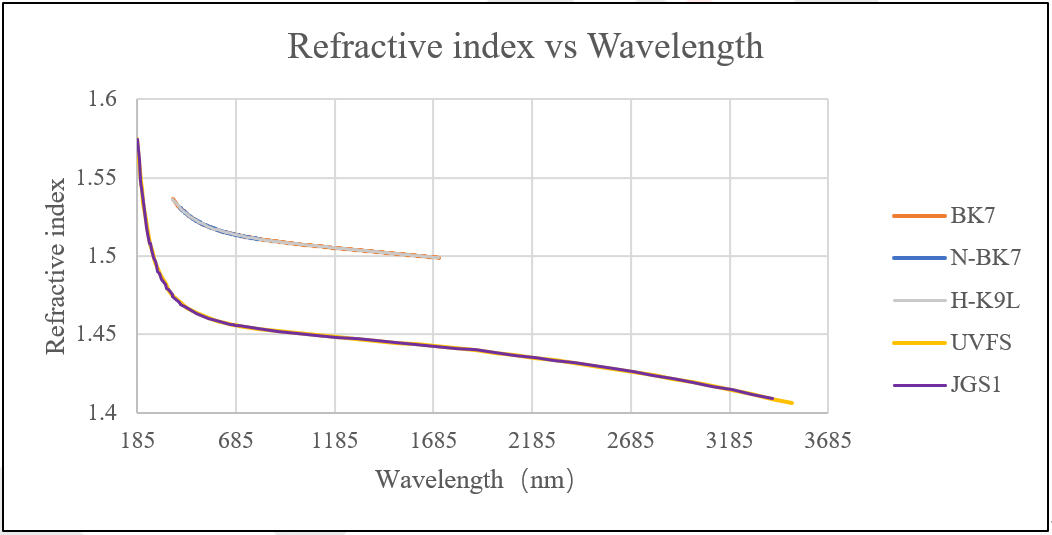
Common optical glass used in the ultraviolet (UV) band includes Ultraviolet Fused Silica (UVFS). Frequently used quartz materials include domestic JGS1, JGS2, JGS3, Corning 7980, and high - quality quartz glass from OHARA (such as SK - 1300, SK - 1310, SK - 1320L, SK - 1321, etc.).
Corning 7980 boasts excellent uniformity and low levels of bubbles and impurities, making it widely used in laser components to provide a higher laser - induced damage threshold.
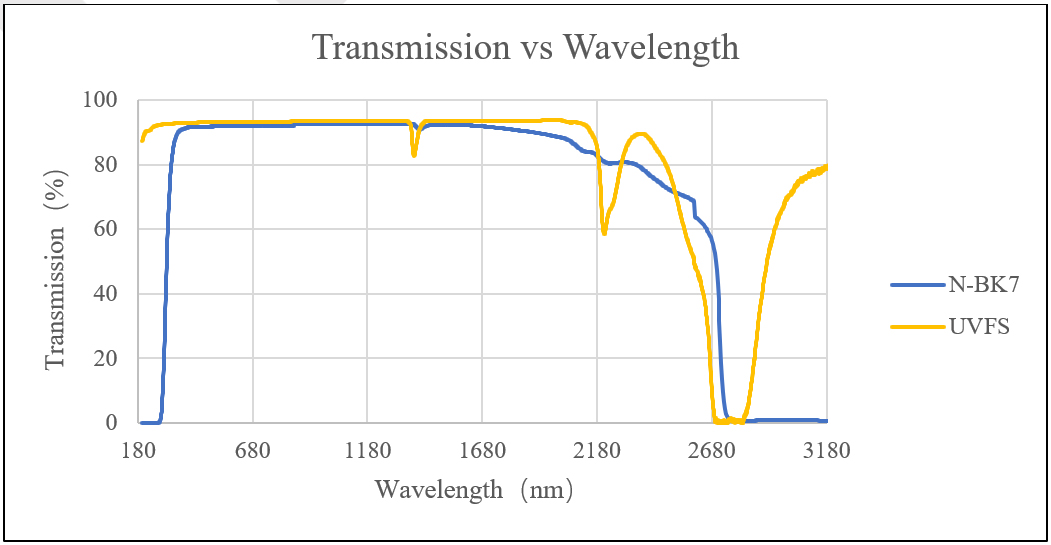
For the visible and near - infrared (NIR) bands, common optical glass materials include SCHOTT N - BK7, float glass B270, and CDGM H - K9L. N - BK7 and H - K9L have similar properties and are interchangeable. They offer high transmittance in the visible and near - infrared spectrum (350 nm - 2.0 µm).
H - K9L fine - annealed optical glass is the most commonly used glass in our high - quality optical components. As a type of hard glass, it can withstand various physical and chemical stresses. It is relatively scratch - resistant and chemical - resistant. With low bubble and impurity content, it is highly suitable for manufacturing precision components such as precision lenses, windows, and prisms.
02 Optical Crystal
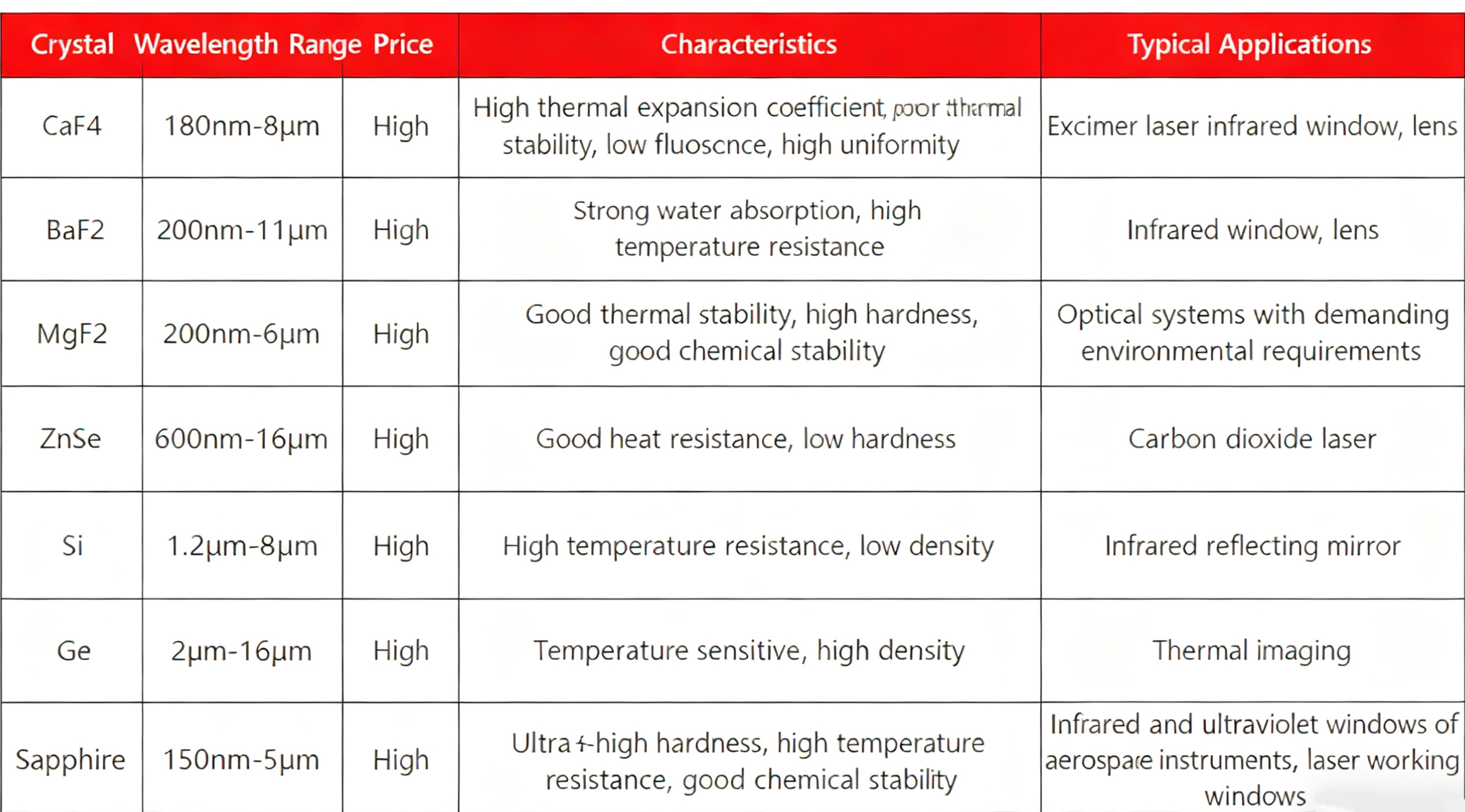
Optical Crystals refer to the general term for crystalline materials used as optical mediums. Thanks to their structural characteristics, they are widely applied in manufacturing windows, lenses, and prisms for various ultraviolet and infrared applications. They are further classified into Single Crystals and Polycrystals based on their crystal structures. Single - crystal materials offer higher crystal integrity, higher light transmittance, and lower insertion loss, so the commonly used optical crystals are predominantly single crystals.
.png)
◆ Common UV and infrared crystalline materials include: Quartz (SiO₂), Calcium Fluoride (CaF₂), Lithium Fluoride (LiF), Rock Salt (NaCl), Silicon (Si), Germanium (Ge), etc.
◆ Polarizing Crystals: Commonly used polarizing crystals include Calcite (CaCO₃), Quartz (SiO₂), and Sodium Nitrate (Niter), etc.
◆ Apochromatic Crystals: These crystals utilize their special dispersion properties to manufacture apochromatic objectives. For instance, Calcium Fluoride (CaF₂) combined with glass forms an apochromatic system, which can eliminate spherical aberration and secondary spectrum.
◆ Laser Crystals: These can be used as the active medium in solid - state lasers, such as Ruby, Calcium Fluoride, and Neodymium - Doped Yttrium Aluminum Garnet (Nd:YAG) crystals, etc.
03 Special Optical Materials
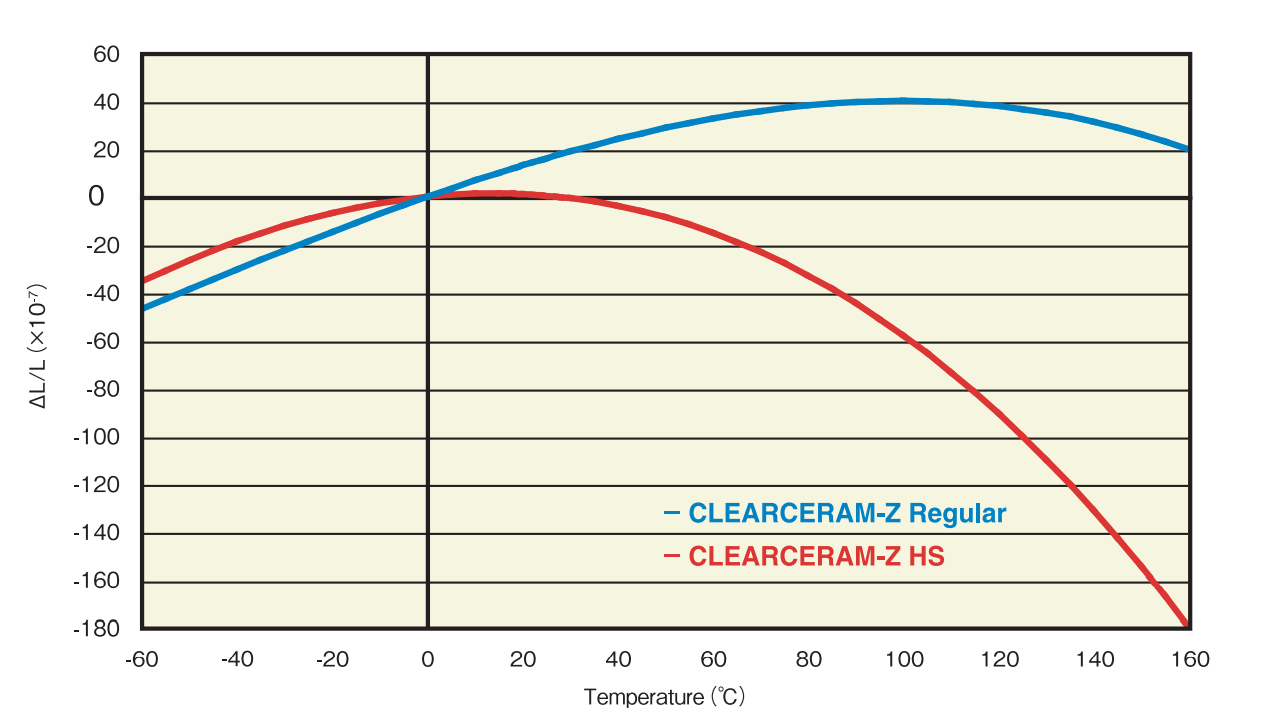
Glass-ceramics is a type of special optical material that is neither glass nor crystal, lying between glass and crystals. The main difference between glass-ceramics and ordinary optical glass lies in its crystalline structure; while its primary distinction from ceramics is that its crystalline structure is much finer than that of ceramics. It features a low coefficient of thermal expansion, high strength, high hardness, low density, and excellent stability, making it widely used in manufacturing optical flats, standard meter bars, large-scale reflectors, laser-guided gyroscopes, and other components.
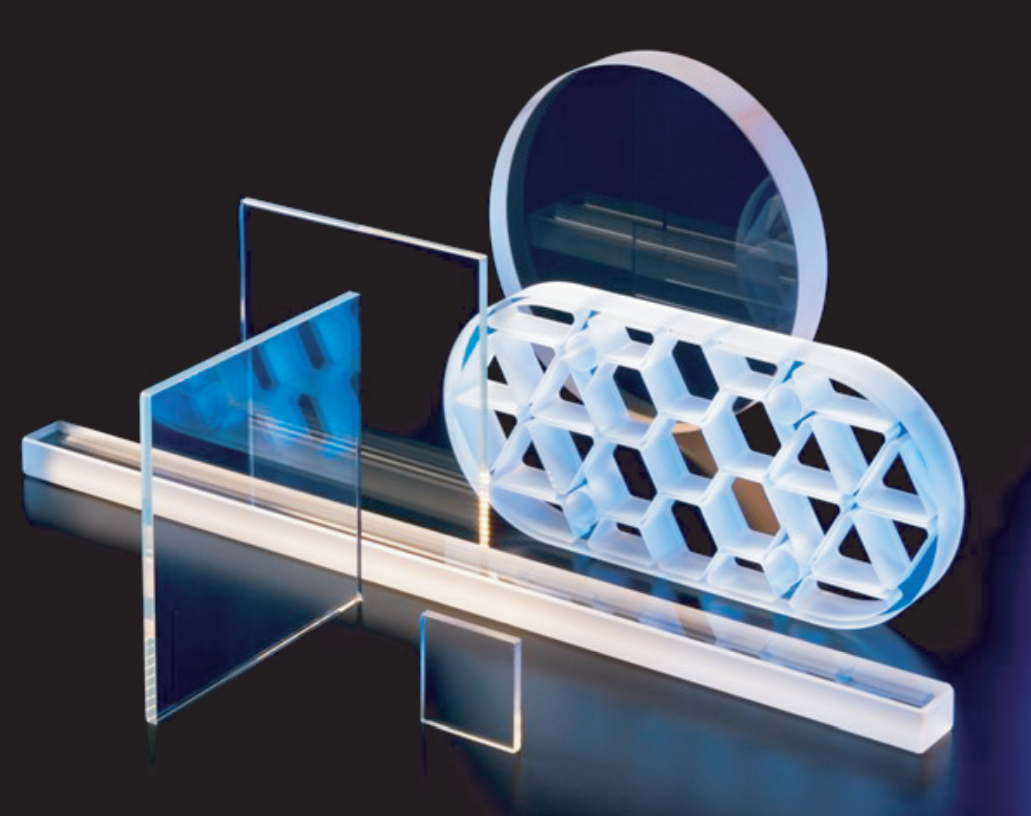
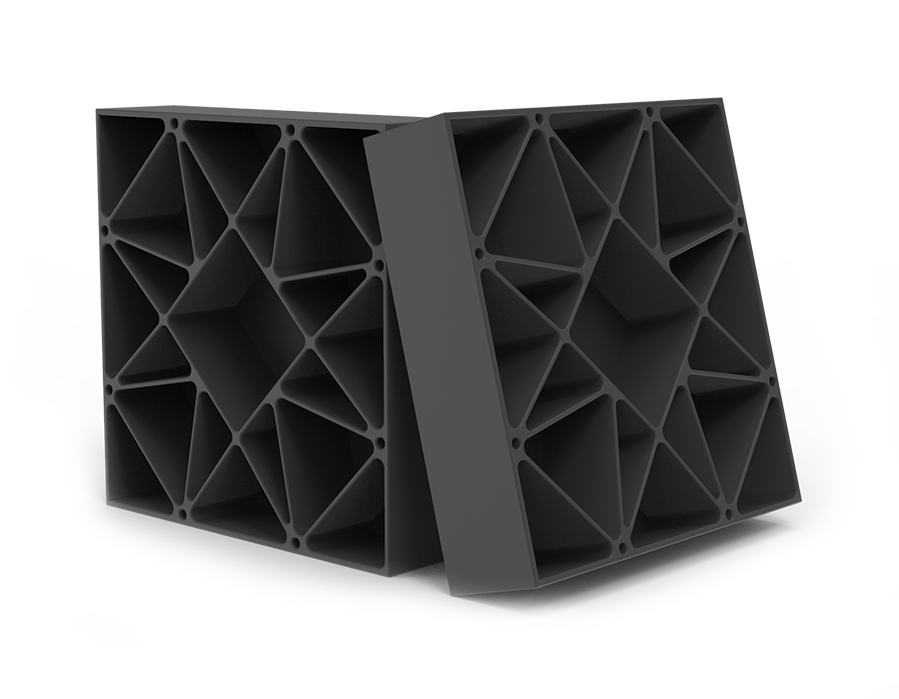
Silicon Carbide (SiC) is a special ceramic material that can also be used as an optical material. It boasts excellent stiffness ratio, low thermal deformation coefficient, superior thermal stability, and remarkable weight reduction effect. Regarded as the primary material for large-size lightweight reflectors, silicon carbide is widely applied in aerospace, high-power laser, semiconductor and other fields.
The above major categories of optical materials can also be referred to as optical dielectric materials. When light passes through them, properties such as its propagation direction, phase, and intensity can be altered. In addition to these major types of optical dielectric materials, optical fiber materials, optical thin-film materials, liquid crystal materials, luminescent materials, and others also fall under the category of optical materials. The development of optical technology is inseparable from optical material technology, and we look forward to further advancements in China's optical material technology.
